Hurricane season is an annual challenge for North Carolina homeowners. While securing your home is vital, it’s equally important to prepare your landscape. High winds, heavy rain, and flooding can wreak havoc on outdoor spaces, damaging plants, trees, and hardscapes. Proper preparation can minimize the damage and make cleanup easier. Here’s a comprehensive hurricane preparedness checklist for your landscape:
Inspect and Prune Trees
One of the most significant risks during a hurricane is falling branches or trees. Before a storm, inspect your trees for weak, dead, or overhanging branches. Prune these areas to reduce the chance of breakage.
Tip: Work with a certified arborist for large trees to ensure proper pruning techniques are used. Over-pruning can weaken a tree and make it more vulnerable to wind damage.
Secure Outdoor Furniture and Decorations
Items like patio furniture, garden décor, and potted plants can become dangerous projectiles during high winds. Move smaller items indoors and secure larger pieces with heavy-duty straps or chains.
Tip: Store potted plants in a garage or covered area to protect them from flying debris and excessive rain.
Clear Gutters and Drains
Clogged gutters and drains can lead to flooding and water damage in your yard and home. Before the storm, remove debris from gutters, downspouts, and landscape drains to ensure proper water flow.
Tip: Check that any drainage systems in your yard are free of blockages to prevent pooling water around plants and structures.
Protect Vulnerable Plants
Cover delicate or young plants with burlap, tarps, or specialized plant covers to shield them from wind and debris. Consider staking taller plants to provide additional support.
Tip: Mulch around plants to help absorb excess water and stabilize roots, but avoid piling mulch directly against the plant stem.
Turn Off Irrigation Systems
Heavy rains from hurricanes make irrigation unnecessary. Shut off your system to prevent overwatering and potential damage to the system itself.
Tip: After the storm, inspect the system for leaks or clogs caused by debris before turning it back on.
Secure Trees with Proper Bracing
If you have recently planted trees, ensure they are securely staked. Improper bracing can lead to uprooted trees in strong winds. Use flexible ties to allow for some movement, which encourages stronger root systems.
Remove Debris and Loose Materials
Survey your yard for loose sticks, rocks, or other debris that could become dangerous in strong winds. Collect and store these items in a safe location until after the storm.
Prepare for Power Outages
If you have outdoor lighting, fountains, or pumps, disconnect them to avoid electrical damage. Consider investing in solar-powered landscape lights for backup lighting.
Create a Post-Storm Plan
After the hurricane passes, assess your landscape for damage. Look for uprooted trees, erosion, and broken branches. Address safety hazards first, such as fallen power lines or leaning trees.
Preparing your landscape for a hurricane may feel like a daunting task, but taking proactive steps can save time, money, and stress in the aftermath. A well-maintained landscape is more resilient, protecting not only your property but also your home. Stay safe, and don’t hesitate to contact a professional landscaping team for assistance in securing or restoring your outdoor space!
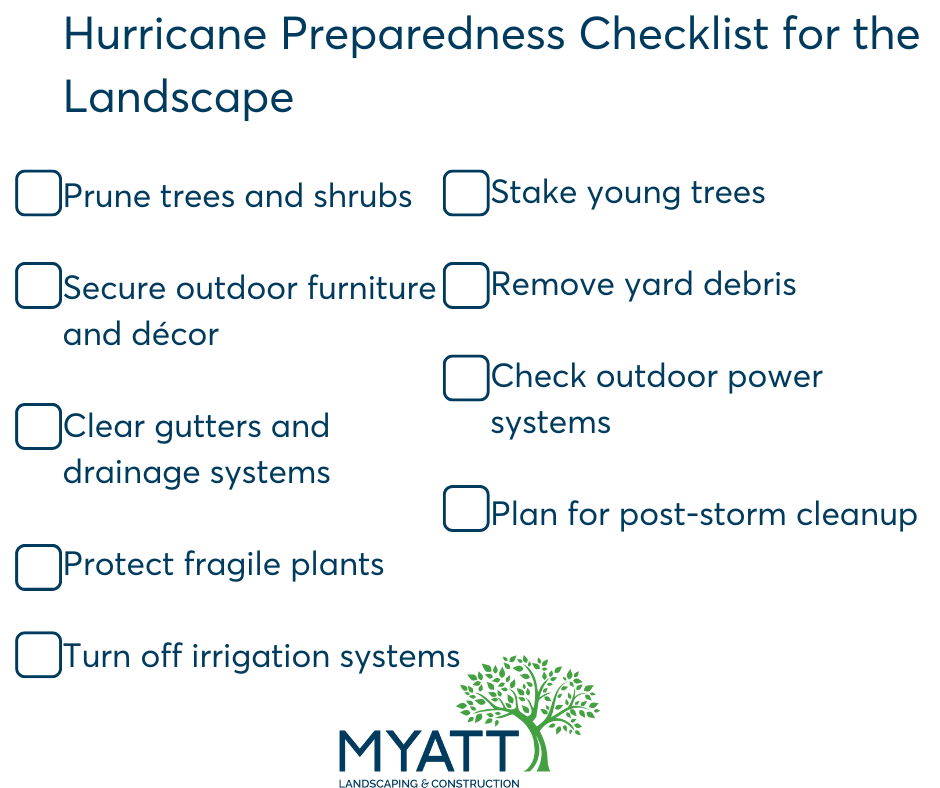
Storm-Ready Landscapes Protect Triangle Properties
Hurricane season in North Carolina brings high winds, heavy rainfall, and sudden weather shifts that can put significant stress on residential landscapes. Trees, drainage systems, irrigation components, and unsecured outdoor elements are especially vulnerable if not properly prepared.
Proactive inspection, strategic pruning, proper bracing, and drainage evaluation can dramatically reduce storm-related damage. Planning ahead not only protects plant health and hardscapes, but also helps minimize costly cleanup and repairs after severe weather passes.
Our team works with homeowners throughout Raleigh, Durham, Chapel Hill, and the surrounding Triangle to strengthen landscapes before storm season and assist with restoration when needed.
If you want to reduce storm risk and improve your property’s resilience, a professional landscape evaluation can help identify vulnerabilities before the next weather event.
👉 Schedule a Landscape Evaluation
Serving Homeowners Across the Triangle
If you’re in Raleigh, Durham, or Chapel Hill and need expert help with landscaping, hardscaping, or outdoor construction, Myatt Landscaping and Construction is here to help.
From custom patios and retaining walls to full outdoor design-build projects, our local team has served the Triangle area for more than 25 years.
📍 Myatt Landscaping and Construction
217 Technology Park Ln, Fuquay-Varina, NC 27526
☎ (919) 577-6050
Come Visit Us!
Frequently Asked Questions
How can I prepare my landscape for hurricane season?
Inspect and prune trees, secure outdoor furniture, clear drainage systems, shut off irrigation before heavy rain, and protect vulnerable plants. Addressing weak branches and drainage issues early can significantly reduce storm damage.
Should trees be pruned before a storm?
Yes, but pruning should be selective and strategic. Removing dead or weak limbs helps reduce breakage, but over-pruning can weaken trees. Professional guidance is recommended for larger trees.
How does drainage impact storm damage?
Poor drainage can lead to soil saturation, root instability, erosion, and pooling around structures. Ensuring gutters, downspouts, and landscape drains are clear helps prevent flooding and plant decline.
Should irrigation systems be turned off before a hurricane?
Yes. Heavy rainfall makes irrigation unnecessary and turning the system off prevents overwatering and potential mechanical damage during the storm.
What should I do after the storm passes?
Assess trees for structural damage, look for leaning trunks or broken limbs, inspect drainage and irrigation systems, and address safety hazards first. Professional evaluation may be needed for significant damage.
Can landscape design improve storm resilience?
Yes. Proper plant selection, spacing, root establishment, and drainage planning all contribute to a more storm-resilient property.
When should homeowners seek professional assistance?
If trees are large, leaning, or structurally compromised, or if drainage and erosion issues persist after heavy rain, professional evaluation ensures safe and effective solutions.