A well-designed landscape should do more than look beautiful. It should invite people outside. One of the most impactful ways to increase both enjoyment and long-term value is by incorporating sports and recreation directly into your outdoor space. Whether for young children, competitive teenagers, or active adults, athletic elements can transform a yard into a multi-generational destination.
Designing for Everyday Activity
For families with young children, simple additions can make a lasting difference. Open turf areas for soccer, a level lawn for kickball, or a half-court basketball setup create spaces where movement becomes part of daily life. These do not require sprawling acreage. With thoughtful layout and proper grading, even modest properties can accommodate functional play areas.
Synthetic turf is often considered for high-traffic sports zones, while natural grass can be reinforced with improved soil preparation and drainage to withstand wear. Proper base preparation is just as critical in sports surfaces as it is in patios or driveways. Compaction, slope, and drainage all determine whether the surface remains safe and usable year-round.
Multi-Generational Recreation
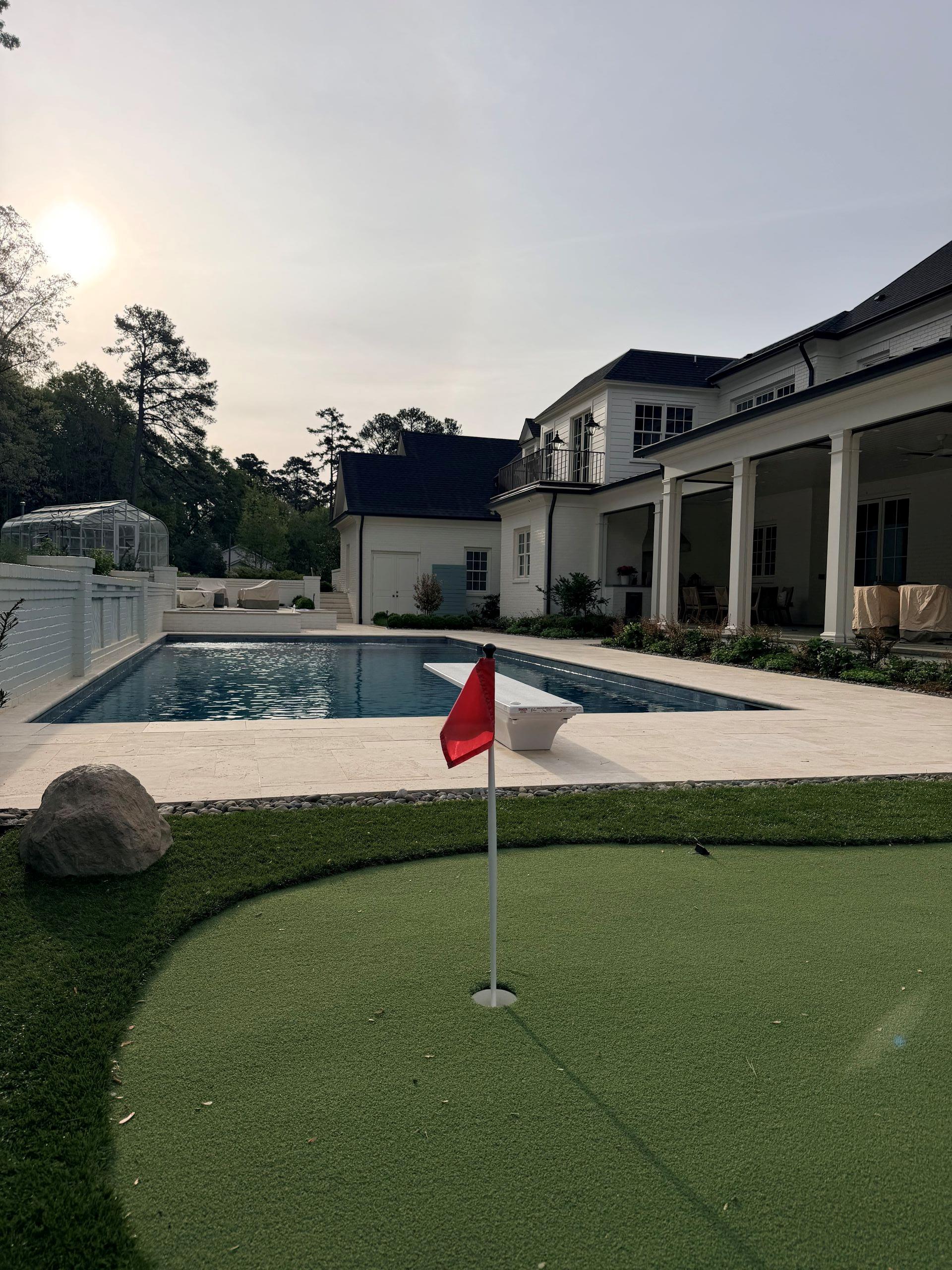
Sports in the landscape are not just for children. Many homeowners are choosing features that appeal across age groups. Pickleball courts, putting greens, bocce courts, and swimming pools allow older adults to stay active while remaining close to home.
Pickleball, in particular, has seen explosive growth across the country. Communities from Charlotte to Austin are building courts to meet demand. Incorporating a scaled version into a residential property can provide daily recreation without the need for travel. The key considerations include surface selection, proper net placement, drainage, and safe perimeter clearances.
Putting greens and bocce courts offer lower-impact activity that blends beautifully into the landscape. These elements can be framed with natural stone, planting beds, or low retaining walls to integrate seamlessly into the overall design rather than feeling like an afterthought.
Commercial and Community Applications
Incorporating sports into landscapes extends beyond residential properties. Corporate campuses, schools, and multi-family communities are increasingly investing in recreational amenities to promote wellness and community engagement.
Courtyards that include ping-pong tables, fitness stations, or turf training areas encourage interaction. Athletic elements also improve property appeal and tenant retention. In commercial settings, durability and safety are paramount. Surfaces must handle heavier use, and proper installation ensures compliance with safety standards and long-term performance.
Thoughtful traffic flow planning is essential. Pathways should guide users safely between active areas and pedestrian routes. Buffer plantings can provide visual screening and safety separation.
Surface Selection and Safety
Choosing the right materials is one of the most important decisions in sports-oriented landscapes.
Concrete and sport court tiles provide durability for basketball and pickleball. Synthetic turf offers a consistent surface for training zones. Natural grass provides versatility but requires irrigation and ongoing maintenance.
Drainage is critical in all cases. Standing water not only damages surfaces but creates slip hazards. Proper grading, subsurface drainage systems, and appropriate base materials ensure longevity.
Lighting is another consideration. If the space will be used in the evening, integrated landscape lighting must reduce glare while maintaining visibility and safety.
Blending Athletics With Aesthetics
The artistry of landscape design lies in balance. Sports features should feel intentional, not intrusive. Strategic planting can soften the edges of a court. Seat walls can double as spectator seating. Shade structures and pergolas provide comfort while enhancing architectural appeal.
Material choices should complement the home or building. A modern residence may benefit from sleek concrete and metal accents. A more traditional property may integrate brick or natural stone around athletic features to maintain visual cohesion.
Creating a Lifestyle, Not Just a Feature
Incorporating sports into your landscape is about creating opportunity. It encourages movement, strengthens family bonds, and promotes wellness at every age. A thoughtfully designed recreational space can become the most-used part of a property.
When engineered properly and designed with intention, sports elements add both functional and emotional value. They turn outdoor areas into active environments where memories are built, competition is friendly, and the landscape becomes a living extension of daily life.
Incorporating Sports and Recreation into Your Landscape
In Central North Carolina, outdoor spaces are increasingly designed for more than just appearance - they are built for living. From Raleigh to Cary and throughout the Triangle, homeowners and commercial properties are integrating sports and recreation into their landscapes to create environments that promote activity, connection, and long-term value.
Whether it’s a backyard putting green, a half-court basketball area, or a multi-use turf space, these features transform landscapes into destinations for all ages. When thoughtfully designed, they blend seamlessly with surrounding plantings, hardscapes, and architectural elements.
👉 Design an Active Outdoor Space
Serving Homeowners Across the Triangle
If you’re in Raleigh, Durham, or Chapel Hill and need expert help with landscaping, hardscaping, or outdoor construction, Myatt Landscaping and Construction is here to help.
From custom patios and retaining walls to full outdoor design-build projects, our local team has served the Triangle area for more than 25 years.
📍 Myatt Landscaping and Construction
217 Technology Park Ln, Fuquay-Varina, NC 27526
☎ (919) 577-6050
Come Visit Us!
Frequently Asked Questions
Can sports features fit into smaller yards?
Yes. With proper grading and layout, even modest properties can accommodate features like turf play areas, half courts, or compact putting greens.
What surfaces are best for sports areas?
Concrete and sport court tiles work well for basketball and pickleball, synthetic turf is ideal for training zones, and natural grass can be used with proper reinforcement and drainage.
Is synthetic turf better than natural grass?
Synthetic turf offers durability and low maintenance for high-traffic areas, while natural grass provides a softer, more traditional feel but requires more upkeep.
Are recreational features only for residential properties?
No. Commercial properties, schools, and multi-family communities often incorporate recreational spaces to enhance tenant experience and encourage wellness.
What safety considerations are important?
Proper drainage, surface selection, spacing, and lighting are critical to ensure safe, year-round use of recreational areas.
Can sports features match my landscape design?
Absolutely. With the right materials, plantings, and layout, athletic elements can be integrated seamlessly into both modern and traditional landscape styles.