Formal hedges can add grandeur to any landscape, reminiscent of the elegance of the Palace of Versailles. Yet, the stringent maintenance of tightly sheared shrubs year-round comes with its own set of drawbacks.
When plants are sheared, the newest leaves—vital for photosynthesis and growth—are often removed, leaving behind older, less productive foliage. This compromises the plant's ability to thrive, making it weaker and more susceptible to various issues. Over time, sheared plants tend to become less healthy and have shorter lifespans compared to their naturally maintained counterparts.
Furthermore, shearing promotes dense growth at the outer edges of branches, leading to shading of the interior foliage. As a result, the inner leaves are often shed due to insufficient light, leaving the plant with a hollow shell of leaves on the outside. This leafy shell can trap moisture, creating a breeding ground for fungal infections.
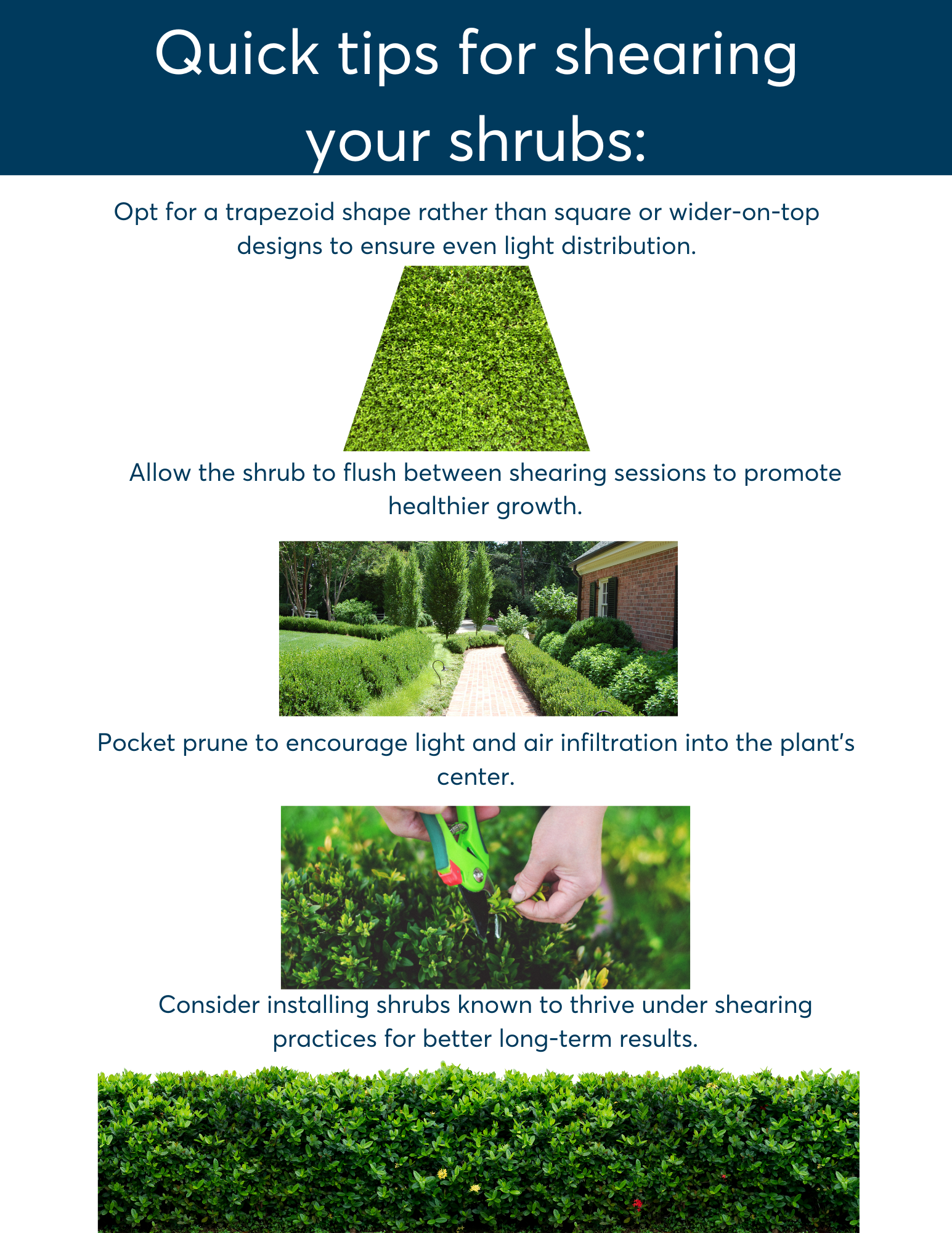
Horticulturalists recommend pocket pruning to mitigate the adverse effects of shearing. This technique involves selectively reducing and removing branches to open up the crown, allowing better sunlight penetration and air circulation. By incorporating a few reduction and removal cuts into your shearing routine, you can maintain a neat appearance while prolonging the life of your hedges.
By striking a balance between aesthetic preferences and the needs of your shrubs, you can enjoy a picturesque landscape that flourishes for years to come.
Smart Pruning for Healthier Hedges in North Carolina
Formal hedges can bring structure and elegance to a landscape, but in Central North Carolina’s humid climate, how you prune matters just as much as how often you prune. Excessive shearing may create a crisp, uniform appearance, yet it can also weaken shrubs over time by removing productive new growth and limiting light penetration.
In areas like Raleigh, Durham, Chapel Hill, and across the Triangle, dense outer growth caused by constant shearing can trap moisture - increasing the risk of fungal disease, especially during humid summers. Over time, this often results in hollow interiors and declining plant health.
A balanced approach, such as pocket pruning, improves airflow and sunlight penetration while maintaining a clean, structured look. Strategic reduction cuts help extend the lifespan of boxwoods, hollies, and other commonly sheared shrubs throughout the region.
👉 Schedule a Professional Pruning Consultation
Serving Homeowners Across the Triangle
If you’re in Raleigh, Durham, or Chapel Hill and need expert help with landscaping, hardscaping, or outdoor construction, Myatt Landscaping and Construction is here to help.
From custom patios and retaining walls to full outdoor design-build projects, our local team has served the Triangle area for more than 25 years.
📍 Myatt Landscaping and Construction
217 Technology Park Ln, Fuquay-Varina, NC 27526
☎ (919) 577-6050
Come Visit Us!
Frequently Asked Questions
Is shearing bad for shrubs?
Frequent shearing can weaken shrubs by removing new growth and limiting light to interior foliage, which may reduce overall plant health over time.
What is pocket pruning?
Pocket pruning involves selectively removing branches to open the canopy, allowing better airflow and sunlight while preserving structure.
Why is airflow important in North Carolina?
High humidity levels increase fungal disease risk. Improved air circulation helps reduce moisture buildup within dense shrubs.
Can I still maintain a formal hedge without constant shearing?
Yes. Incorporating reduction cuts and selective thinning allows you to maintain shape while improving plant longevity.
When is the best time to prune shrubs?
Timing depends on the species. Generally, pruning after flowering or during dormant periods yields the best results.
Should I hire a professional for hedge pruning?
Professional horticultural guidance ensures proper pruning techniques are used, protecting plant health and maintaining long-term landscape quality.