Adding bulbs to your landscaping, annual beds, and planters is one of the simplest and most rewarding ways to introduce vibrant color, texture, and seasonal interest to your outdoor space. These underground powerhouses offer a wide variety of shapes, sizes, and bloom times, making them versatile and adaptable to almost any landscape design. Whether you’re planting in garden beds or container arrangements, bulbs can elevate your landscape with their stunning beauty and easy maintenance.
One of the most appealing aspects of bulbs is their ability to provide early-season color when much of the landscape is still waking up from winter dormancy. Spring-blooming bulbs like daffodils, tulips, crocuses, and hyacinths are among the first signs of the season’s arrival. Their bright, cheerful blooms offer a sense of renewal and excitement as they push through the soil, often before trees and shrubs have fully leafed out. This early burst of color makes bulbs invaluable for adding life to your landscape just when you need it most.
Beyond spring, there are bulbs for every season. Summer-blooming varieties like lilies, gladiolus, and alliums offer striking height and drama, while autumn-blooming colchicums and fall crocuses extend the flowering season into the cooler months. By carefully selecting bulbs with staggered bloom times, you can enjoy continuous color and interest in your garden from early spring through late fall.
Bulbs also offer incredible versatility in the landscape. They can be mass-planted in garden beds for a bold, sweeping effect or tucked into annual beds to complement seasonal flowers. In planters and container gardens, bulbs add height and texture, working beautifully alongside trailing and filler plants. For a naturalized look, bulbs like daffodils and crocuses can be scattered and planted in clusters, creating the impression of flowers emerging spontaneously across the landscape.
Another advantage of bulbs is their low-maintenance nature. Once planted, many bulbs require minimal care and will return year after year, often multiplying and spreading over time. Perennial bulbs like daffodils and alliums naturalize well and need only occasional division to maintain their vigor. Even tender bulbs, like dahlias and gladiolus, which may need to be lifted and stored in colder climates, reward gardeners with spectacular blooms that make the extra effort worthwhile.
When adding bulbs to your landscape, thoughtful planning ensures the best results. Consider bloom time, height, and color when selecting varieties to create harmonious, layered displays. Planting bulbs at the right depth and in well-draining soil is essential for their health and longevity. In annual beds and planters, combine bulbs with seasonal flowers to create dynamic, ever-changing displays.
Whether you’re aiming for a formal garden design, a casual cottage look, or a modern landscape, bulbs can enhance your vision with their versatility and impact. Their ability to transform garden beds and container arrangements with vibrant color and texture makes them an essential addition to any landscape. By incorporating bulbs into your outdoor spaces, you’ll enjoy a more beautiful, dynamic garden with blooms that delight across the seasons.
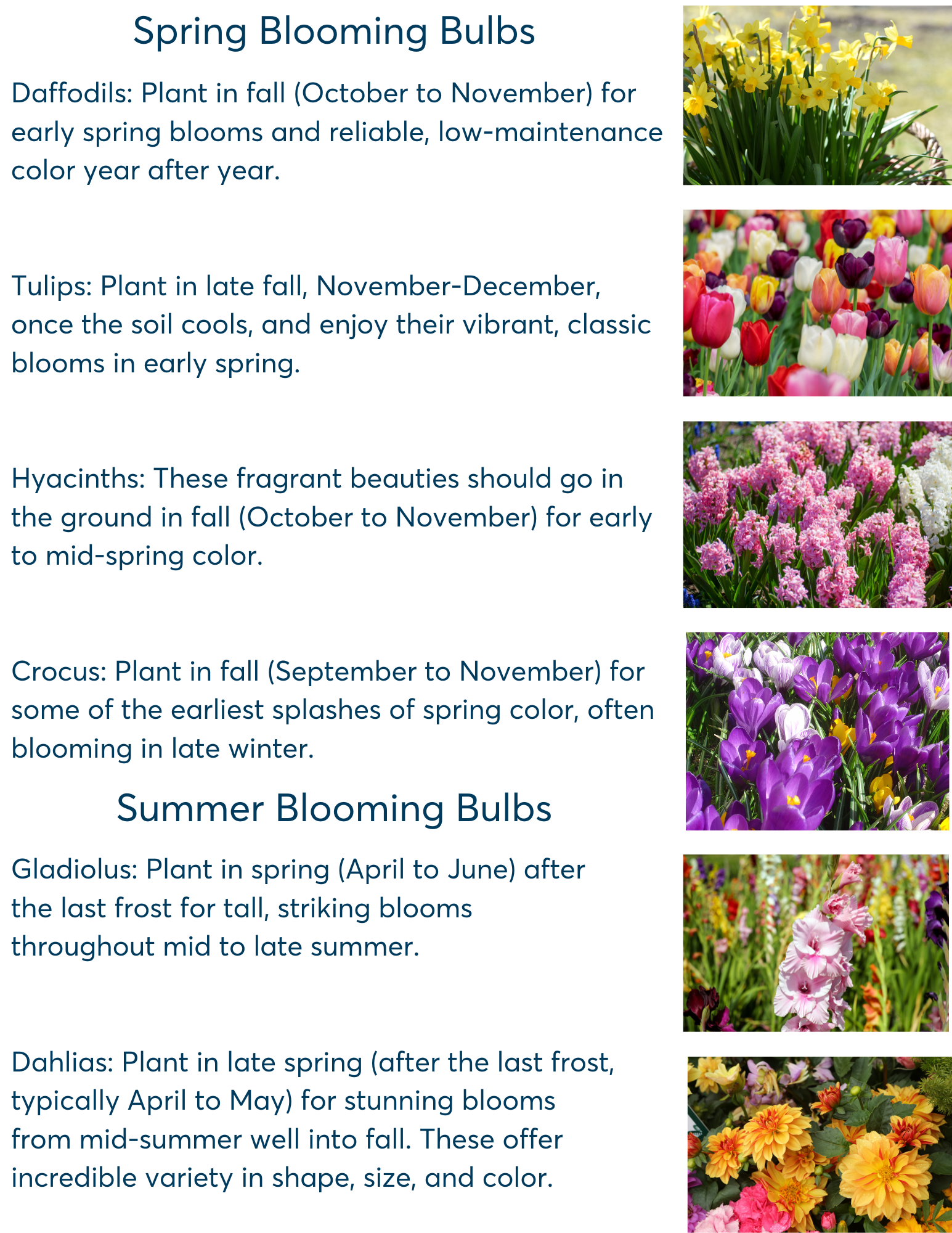
Layering Bulbs for Year-Round Color in the Triangle
Bulbs are one of the most effective ways to introduce layered, seasonal color into North Carolina landscapes. When thoughtfully planned, they provide early spring impact, summer height, and even late-season interest — all without overwhelming the overall design.
In the Triangle, success with bulbs depends on proper depth, drainage, sun exposure, and staggered bloom timing. Integrating bulbs into perennial beds, foundation plantings, and container arrangements requires careful coordination so they complement existing structure and return reliably year after year.
Our team works with homeowners throughout Raleigh, Durham, Chapel Hill, and surrounding communities to design layered planting plans that use bulbs strategically for long-term seasonal impact.
If you’d like to enhance your beds or containers with well-planned seasonal color, a professional planting plan can ensure your bulbs perform beautifully across multiple seasons.
👉 Schedule a Seasonal Planting Consultation
Serving Homeowners Across the Triangle
If you’re in Raleigh, Durham, or Chapel Hill and need expert help with landscaping, hardscaping, or outdoor construction, Myatt Landscaping and Construction is here to help.
From custom patios and retaining walls to full outdoor design-build projects, our local team has served the Triangle area for more than 25 years.
📍 Myatt Landscaping and Construction
217 Technology Park Ln, Fuquay-Varina, NC 27526
☎ (919) 577-6050
Come Visit Us!
Frequently Asked Questions
When should bulbs be planted in Raleigh, Durham, and Chapel Hill?
Spring-blooming bulbs are typically planted in the fall before the first hard freeze, while many summer-blooming bulbs are planted in spring after the risk of frost has passed.
Do bulbs come back every year in North Carolina?
Many perennial bulbs, such as daffodils and certain alliums, naturalize well and return annually when planted in appropriate soil and light conditions.
Can bulbs be planted in containers?
Yes. Bulbs work beautifully in planters and can be layered with seasonal annuals for dynamic displays on patios, porches, and entryways.
How deep should bulbs be planted?
Planting depth varies by species, but most bulbs should be planted at a depth roughly two to three times the height of the bulb to ensure proper root development.
Why is drainage important for bulbs?
Bulbs require well-draining soil to prevent rot. Poor drainage can significantly reduce their performance and longevity in landscape beds.
Can bulbs be combined with existing perennial beds?
Absolutely. Layering bulbs among established perennials allows early-season blooms to shine before other plants fully leaf out, creating continuous visual interest.