As winter draws to a close, some beloved evergreens may adopt a bronze hue, prompting a common concern: "Is my plant dying?" Fear not! This transformation, known as "winter bronzing," is a natural occurrence during the transition between seasons. Fluctuating temperatures, sunlight variations, and freezing conditions trigger foliage discoloration. As the ground freezes and plants lose more water than they absorb, evergreen needles or leaves may appear brown, bronze, or even orange. This process, akin to deciduous leaves changing color in fall, unveils the true hues of the foliage. It's a fascinating reminder of nature's seasonal rhythms.
A few commonly affected plants are arborvitae, holly, juniper, azalea and, perhaps most notoriously, boxwood.
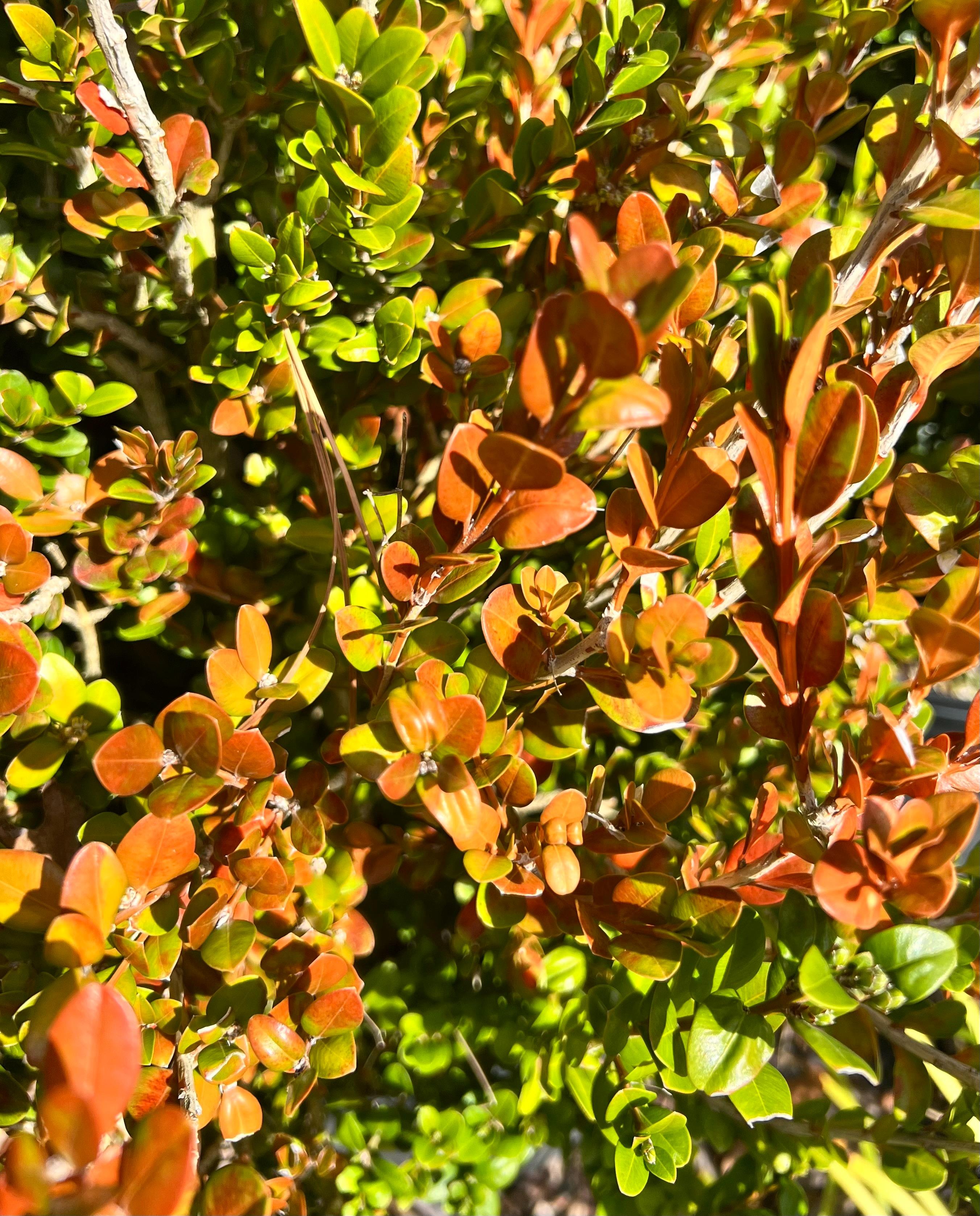
Winter bronzing on boxwood
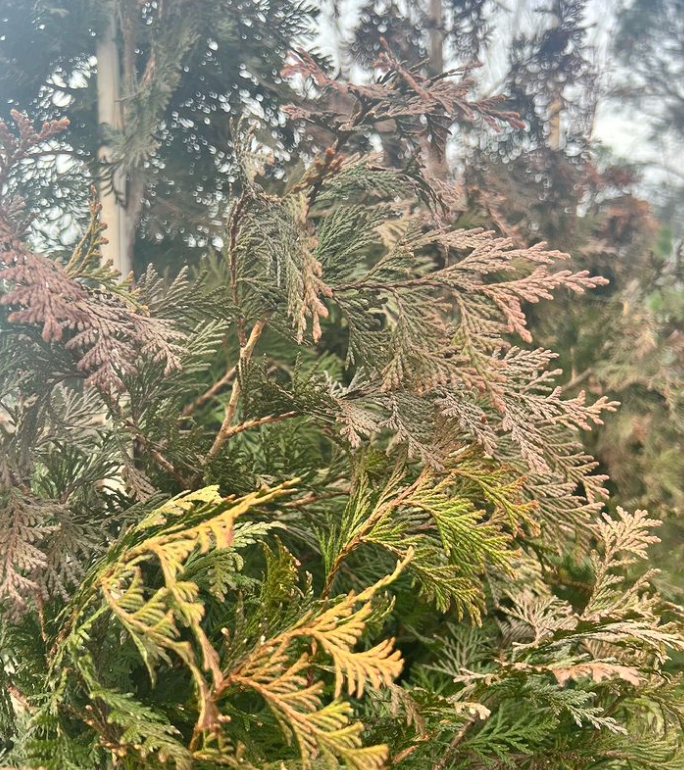
Winter bronzing on arborvitea green giant
Understanding Winter Bronzing in Triangle Landscapes
Winter bronzing is a common concern for homeowners across Central North Carolina, especially when evergreen shrubs suddenly turn shades of bronze, brown, or orange during colder months. While it may look alarming, this discoloration is often a natural seasonal response rather than a sign of plant death.
In the Triangle’s fluctuating winter temperatures, evergreens can lose moisture faster than they absorb it when the ground is frozen. Increased sun exposure and cold winds can intensify the effect, particularly on plants like arborvitae, boxwood, holly, juniper, and azalea.
Our team monitors winter stress patterns for clients throughout Raleigh, Durham, Chapel Hill, and surrounding communities - distinguishing normal seasonal bronzing from true winter injury or plant decline.
If your evergreens are showing unusual discoloration or fail to green back up in spring, a professional evaluation can determine whether corrective action is needed.
👉 Schedule a Plant Health Assessment
Serving Homeowners Across the Triangle
If you’re in Raleigh, Durham, or Chapel Hill and need expert help with landscaping, hardscaping, or outdoor construction, Myatt Landscaping and Construction is here to help.
From custom patios and retaining walls to full outdoor design-build projects, our local team has served the Triangle area for more than 25 years.
📍 Myatt Landscaping and Construction
217 Technology Park Ln, Fuquay-Varina, NC 27526
☎ (919) 577-6050
Come Visit Us!
Frequently Asked Questions
What causes winter bronzing?
Winter bronzing occurs when evergreens lose moisture faster than they can absorb it during cold conditions, revealing natural pigment changes in the foliage.
Is winter bronzing permanent?
In most cases, no. Many evergreens return to their normal green color as temperatures warm and active growth resumes in spring.
Which plants are most affected?
Boxwood, arborvitae, juniper, holly, and azalea are commonly affected by seasonal bronzing in North Carolina landscapes.
How can I protect evergreens from winter stress?
Proper fall watering, mulching, wind protection, and correct plant placement can help reduce moisture loss and winter damage.
When should I be concerned about discoloration?
If foliage remains brown well into spring, shows dieback, or appears brittle and lifeless, the plant may have sustained winter injury and should be evaluated.
Should I prune bronzed foliage immediately?
It’s best to wait until spring growth begins before pruning, as some bronzed foliage may recover once temperatures stabilize.